Advanced Iron Chelates for Plant and Soil Health Growth, Global Trends, Forecast 2034
Iron Chelates are compounds where iron ions are bound to organic chelating agents, forming stable ring-like structures that enhance iron’s solubility, bioavailability, and stability in various environments. The term “chelate” derives from the Greek word for “claw,” reflecting how the ligand grasps the metal ion.
These compounds are widely used in agriculture to correct iron deficiencies in plants (chlorosis), in human and animal nutrition as supplements, in medicine for treating iron overload, and in industrial applications like water treatment. Chelated iron prevents precipitation in alkaline soils or physiological conditions, making it far more effective than inorganic iron salts.
Chemical structure of Ferric EDTA, a common iron chelate.
What Are Chelates and How Do They Work?
A chelate is a coordination complex where a multidentate ligand binds a metal ion at multiple points, increasing stability (measured by stability constant, log K). For iron, common oxidation states are Fe²⁺ (ferrous) and Fe³⁺ (ferric), with Fe³⁺ preferred in chelates due to higher charge and stability.
Chelating agents like EDTA form hexadentate complexes, preventing iron from reacting with phosphates, hydroxides, or other ions that cause precipitation.
Illustration of chelation mechanism with EDTA.
Types of Iron Chelates
Different chelating agents suit varying pH ranges and applications.
Synthetic Chelates
- EDTA (Ethylenediaminetetraacetic acid): Stable at pH 4-6.5; common in fertilizers.
- DTPA (Diethylenetriaminepentaacetic acid): Effective up to pH 7.5.
- EDDHA (Ethylenediamine-N,N’-bis(2-hydroxyphenylacetic acid)): Highly stable in alkaline soils (pH up to 11); preferred for calcareous soils.
- EDDHMA and others: Variants for specific conditions.
Structure of EDDHA, ideal for high-pH environments.
Natural or Amino Acid Chelates
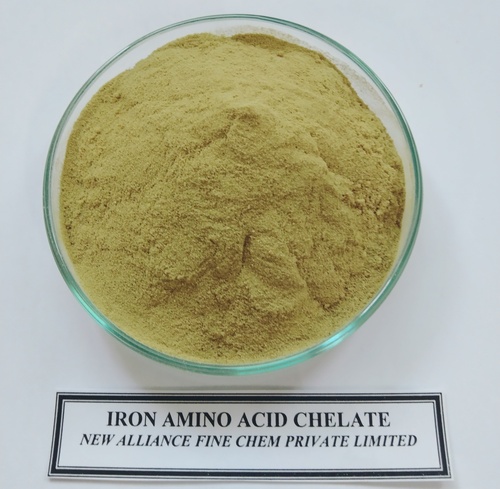
- Citrate, gluconate, or amino acid-bound iron (e.g., ferrous bisglycinate): Better tolerated in human supplements.
Applications in Agriculture
Iron deficiency chlorosis causes yellowing leaves (interveinal) in plants like soybeans, fruits, and ornamentals, especially in high-pH soils where iron precipitates.
Chelated iron fertilizers (e.g., Fe-EDTA 13%, Fe-DTPA 11%, Fe-EDDHA 6%) are applied as soil drench, foliar spray, or fertigation for rapid correction.
Before-and-after treatment showing recovery from chlorosis.
Key Insights:
- As per the analysis shared by our research analyst, the global iron chelates market is estimated to grow annually at a CAGR of around 10% over the forecast period (2025-2034)
- In terms of revenue, the global iron chelates market size was valued at around USD 357.98 million in 2024 and is projected to reach USD 767.36 million by 2034.
- The iron chelates market is projected to grow significantly due to rising awareness of micronutrient deficiencies in crops, a surge in global population and food security concerns, and the growing adoption of fertigation and hydroponic systems.
- Based on type, the EDDHA iron chelates segment is expected to lead the market, while the EDTA iron chelates segment is expected to grow considerably.
- Based on form, the liquid segment is the dominating segment, while the powder/granular segment is projected to witness sizeable revenue over the forecast period.
- Based on crop type, the fruits & vegetables segment is expected to lead the market compared to the cereals & grains segment.
- Based on mode of application, the foliar spray segment leads the market, while the soil application segment is expected to grow considerably.
- Based on region, Europe is projected to dominate the global market during the estimated period, followed by the Asia Pacific.
Iron Chelates Market Dynamics
Growth Drivers
How is the growing awareness of food security and crop nutrition boosting the iron chelates market?
With the global population anticipated to reach 9.7 billion by 2050, there is a surging need for escalated nutritional quality and agricultural productivity. Iron chelates play a vital role in enhancing nutrient density, crop production, and overall plant health, which directly affects food quality and availability. According to reports by the World Bank in 2024, nutrient deficiencies decrease agricultural productivity by 15% in middle and low-income economies. Elevated awareness among farmers for micronutrient management and its link to food security has increased the adoption of the iron chelates market.
How do technological improvements in chelation chemistry drive the iron chelates market?
Constant advancements in chelation solutions have resulted in the development of more bioavailable, stable, and environmentally friendly iron chelates. Innovations in biodegradable chelating agents like GLDA (tetrasodium glutamate diacetate) and IDHA (iminodisuccinic acid) are decreasing the ecological footprint of fertilizers. These upgrades have elevated the efficiency of iron chelates in different soil types and climatic conditions. Hence, manufacturers are increasingly moving towards sustainable formulations to meet the rising consumer demand and regulatory needs for green agrochemicals.
Restraints
Instability in raw material prices negatively impacts the market progress
The production of iron chelates relies on primary raw materials like iron salts, phosphoric acid, and ethylenediamine, whose prices are largely unstable. According to the 2024 reports, the price of ethylenediamine differed by nearly 25% in the past year because of supply chain disturbances and elevated energy prices. This volatility directly impacts the production cost of chelates and eventually the industry price. Producers are forced several times to pass on cost hikes to farmers, decreasing affordability and demand. Recent news shows that geopolitical stresses and energy scarcities in key producing areas have further worsened this challenge.
Opportunities
How does the growth in high-value horticulture and greenhouse farmingcreate promising avenues for the development of the iron chelates industry?
The rise in controlled environment farming and greenhouses, especially in the Middle East and Asia Pacific, is driving the demand for iron chelates. High-value crops like berries, peppers, and tomatoes need precise micronutrient supply for better growth. According to the FAO’s 2024 reports, approximately 15-18% of greenhouse acreage worldwide creates a steady market for chelated iron fertilizers. Vertical and hydroponic farms depend heavily on chelated nutrients because of water solubility and stability. The segment offers a premium opportunity for producers to supply high-performing and dedicated chelate formulations, impacting the growth of the iron chelates industry.
Medical and Industrial Uses
- Chelation Therapy: Agents like deferoxamine or deferasirox remove excess iron in thalassemia or hemochromatosis.
- Water Treatment: Prevent iron scaling.
Advantages and Considerations
Chelates provide superior uptake but cost more than inorganic forms. Overuse risks environmental accumulation (some like EDTA are slow to biodegrade).
Conclusion
Iron chelates revolutionize nutrient delivery by stabilizing this essential micronutrient. From greening crops in challenging soils to supporting human health, their targeted stability makes them indispensable in modern agriculture, nutrition, and medicine. Ongoing research focuses on biodegradable alternatives for sustainability.
More articles by ZMR Research:
https://www.zionmarketresearch.com/de/report/glycerol-monostearate-market
https://www.zionmarketresearch.com/de/report/pickleball-market
https://www.zionmarketresearch.com/de/report/eubiotics-market
https://www.zionmarketresearch.com/de/report/foam-trays-market
https://www.zionmarketresearch.com/de/report/knx-products-market