Butyl Acrylate: Properties, Uses, and Industrial Applications
Butyl Acrylate (BA), with the chemical formula CH₂=CHCOOCH₂CH₂CH₂CH₃, is an important acrylic ester monomer widely used in the production of polymers and copolymers. It is a clear, colorless liquid with a characteristic fruity odor, belonging to the family of acrylate esters derived from acrylic acid. Butyl acrylate is the butyl ester of acrylic acid and is produced on a massive industrial scale, with global production exceeding several million tons annually.
First synthesized in the early 20th century, butyl acrylate gained commercial significance post-World War II as acrylic polymers revolutionized coatings, adhesives, and textiles. By 2025, it remains a cornerstone of the acrylic monomers market, valued at billions of USD, driven by demand in paints, sealants, and superabsorbent polymers. Key producers include BASF, Dow Chemical, Arkema, and Mitsubishi Chemical, with Asia-Pacific dominating manufacturing capacity.
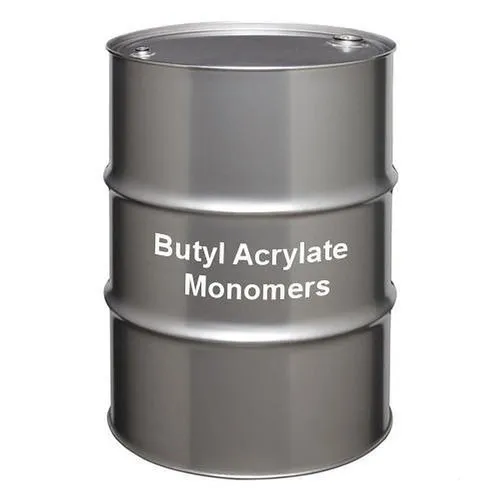
Chemical and Physical Properties
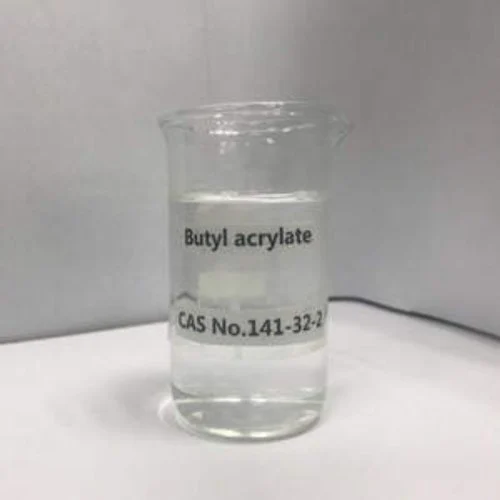
Butyl acrylate is a volatile, flammable liquid with the following key properties:
- Molecular weight: 128.17 g/mol.
- Boiling point: 145-148°C.
- Melting point: -64°C.
- Density: 0.89-0.90 g/cm³ at 20°C.
- Vapor pressure: 4-5 mmHg at 20°C.
- Flash point: 49°C (closed cup).
- Solubility: Slightly soluble in water (~1.4 g/L), fully miscible with most organic solvents.
- Refractive index: ~1.418.
It polymerizes readily in the presence of heat, light, or initiators, forming poly(butyl acrylate) with a glass transition temperature (Tg) around -54°C, imparting flexibility and softness. Commercial grades are stabilized with inhibitors like hydroquinone monomethyl ether (MEHQ, 10-100 ppm) to prevent premature polymerization.
Butyl acrylate is reactive, undergoing addition reactions typical of α,β-unsaturated esters, and is incompatible with strong oxidizers, acids, and bases.
Production Methods
Industrial production primarily follows the propylene oxidation route:
- Propylene is oxidized to acrolein, then to acrylic acid.
- Acrylic acid is esterified with n-butanol using acidic catalysts (sulfuric acid or ion-exchange resins) in a continuous reactor.
- The crude ester is purified by distillation, with inhibitors added.
Alternative routes include acetylene-based (Reppe process, largely obsolete) or bio-based methods using renewable acrylic acid precursors. Modern plants achieve >99% purity, with byproducts recycled for efficiency.
Applications and Uses
Butyl acrylate’s primary use (>90%) is as a monomer in emulsion polymerization for:
- Paints and Coatings: Provides adhesion, flexibility, and weather resistance in architectural and automotive paints.
- Adhesives and Sealants: Pressure-sensitive adhesives, construction sealants.
- Textiles and Leather: Fabric finishes, nonwovens.
- Superabsorbent Polymers: Copolymerized with acrylic acid for diapers and hygiene products.
- Other: Paper coatings, inks, elastomers.
Copolymers with styrene, vinyl acetate, or methyl methacrylate tailor properties for specific needs.
Health and Safety Considerations
Butyl acrylate is classified as hazardous:
- Acute toxicity: Moderate (LD50 oral rat ~3,000 mg/kg).
- Irritant: Strong skin/eye/respiratory irritant; may cause sensitization/allergic dermatitis.
- Inhalation: Vapors cause headaches, dizziness; chronic exposure linked to respiratory issues.
- Carcinogenicity: IARC Group 3 (not classifiable); some studies suggest potential at high exposure.
- Flammability: Forms explosive peroxides if uninhibited.
Handling requires ventilation, PPE (gloves, goggles), and inhibitor monitoring. OSHA PEL: 10 ppm TWA.
Environmental Impact
Butyl acrylate has low bioaccumulation potential but moderate aquatic toxicity (LC50 fish ~1-10 mg/L). It biodegrades readily (>60% in 28 days) but is volatile, contributing to VOC emissions. Spills require containment; production plants implement closed systems to minimize releases.
Regulations and Recommendations
Regulated under REACH (EU), TSCA (US), and GHS labeling as flammable/irritant. Transport classified UN 2348. Recommendations: Use inhibited grades, store cool/dark, and employ vapor recovery systems.
Butyl acrylate remains indispensable in polymer chemistry, balancing performance with manageable risks through modern safety practices. Ongoing research explores greener synthesis and bio-based alternatives amid sustainability pressures.
More articles by ZMR Researche:
https://www.zionmarketresearch.com/de/report/epoxy-composite-markethttps://www.zionmarketresearch.com/de/report/packaged-food-essence-ingredient-markethttps://www.zionmarketresearch.com/de/report/fashion-event-markethttps://www.zionmarketresearch.com/de/report/secondary-macronutrients-markethttps://www.zionmarketresearch.com/de/report/refurbished-smart-watches-market
https://www.zionmarketresearch.com/de/report/epoxy-composite-markethttps://www.zionmarketresearch.com/de/report/packaged-food-essence-ingredient-markethttps://www.zionmarketresearch.com/de/report/fashion-event-markethttps://www.zionmarketresearch.com/de/report/secondary-macronutrients-markethttps://www.zionmarketresearch.com/de/report/refurbished-smart-watches-market
https://www.zionmarketresearch.com/de/report/epoxy-composite-markethttps://www.zionmarketresearch.com/de/report/packaged-food-essence-ingredient-markethttps://www.zionmarketresearch.com/de/report/fashion-event-markethttps://www.zionmarketresearch.com/de/report/secondary-macronutrients-markethttps://www.zionmarketresearch.com/de/report/refurbished-smart-watches-market
https://www.zionmarketresearch.com/de/report/epoxy-composite-markethttps://www.zionmarketresearch.com/de/report/packaged-food-essence-ingredient-markethttps://www.zionmarketresearch.com/de/report/fashion-event-markethttps://www.zionmarketresearch.com/de/report/secondary-macronutrients-markethttps://www.zionmarketresearch.com/de/report/refurbished-smart-watches-market
https://www.zionmarketresearch.com/de/report/epoxy-composite-markethttps://www.zionmarketresearch.com/de/report/packaged-food-essence-ingredient-markethttps://www.zionmarketresearch.com/de/report/fashion-event-markethttps://www.zionmarketresearch.com/de/report/secondary-macronutrients-markethttps://www.zionmarketresearch.com/de/report/refurbished-smart-watches-market