Fire Proof Doors: Types, Ratings, and Applications
Fire Proof Door, more accurately termed a fire-rated door or fire-resistant door, is a specialized door assembly engineered to withstand fire and smoke for a specified duration, preventing or delaying the spread of flames, heat, and toxic gases between compartments in a building. These doors are integral to passive fire protection systems, providing critical time for evacuation, firefighting, and property protection.
Fire-rated doors have been mandatory in building codes since the early 20th century, following devastating fires that highlighted the need for compartmentation (e.g., the 1911 Triangle Shirtwaist Factory fire). Modern standards evolved from basic wooden doors with intumescent seals to sophisticated assemblies tested under rigorous conditions. As of 2025, the global fire-rated door market is valued at approximately USD 10-15 billion, driven by stringent building regulations, urbanization, and demand for high-rise safety. Leading manufacturers include Assa Abloy, Dormakaba, Allegion, and regional specialists like Hörmann and Nabco.
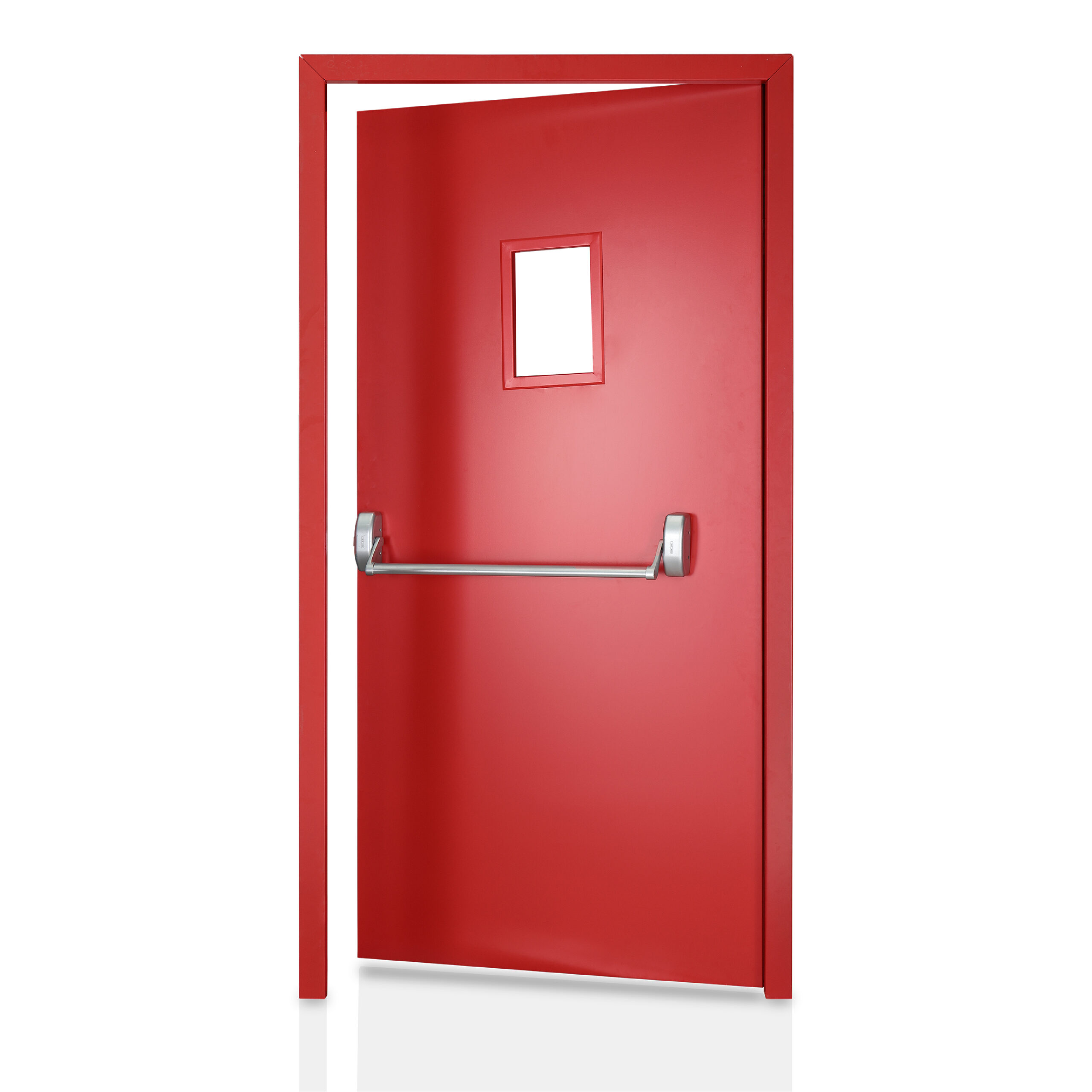
Construction and Components
Fire-rated doors are complete assemblies comprising:
- Door Leaf: Core material determines rating.
- Solid timber (limited to 30-60 minutes).
- Mineral core (gypsum, vermiculite) for 90-120 minutes.
- Steel or composite with insulating infill.
- Frame: Steel or timber, anchored securely to walls.
- Seals: Intumescent strips expand under heat to seal gaps; cold smoke seals for low-temperature smoke.
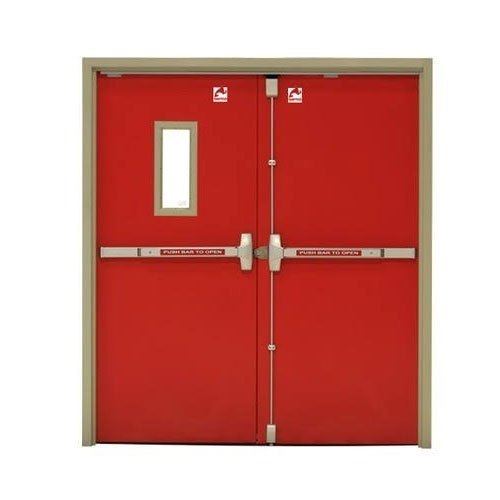
- Hardware: Fire-rated hinges, latches, closers, panic bars; must maintain integrity.
- Glazing: Wired glass or ceramic glass for vision panels (rated separately).
- Threshold: Drop seals or ramps for smoke control.
Doors are tested as assemblies—individual components alone do not guarantee performance.
Fire Ratings and Standards
Ratings indicate duration of resistance:
- 20/30 minutes: Low-risk areas.
- 60 minutes: Common in apartments, corridors.
- 90-120 minutes: High-rise stairwells, server rooms.
- 180-240 minutes: Critical infrastructure.
Testing standards:
- UL 10B/10C (U.S.).
- EN 1634-1 (Europe).
- BS 476 (UK).
- ISO 3008.
Criteria: Integrity (no flame passage), insulation (temperature rise limited on unexposed side), and smoke leakage (S_a or S_m designation).
Types of Fire Proof Doors
- Timber Fire Doors Aesthetic; solid or composite core; popular in residential/commercial interiors.
- Steel Fire Doors Durable, cost-effective; hollow metal or insulated; industrial/commercial use.
- Glass Fire Doors Framed ceramic/borosilicate glass; vision without compromising rating.
- Roller Shutter Fire Doors For large openings (warehouses, garages).
- Acoustic Fire Doors Dual sound/fire resistance.
- Radiation-Shielding Fire Doors Lead-lined for medical facilities.
Installation and Maintenance
- Installed by certified professionals.
- Gaps ≤3 mm; intumescent seals intact.
- Self-closing devices functional.
- Annual inspections: Check seals, hardware, signage.
Common failures: Wedging open, damaged seals, improper hardware.
Applications
- Residential: Apartment entrances, garages.
- Commercial: Offices, hotels, schools.
- Healthcare: Hospitals (compartmentation critical).
- Industrial: Factories, warehouses.
- High-Rise: Stairwells, elevator lobbies.
Benefits
- Life safety: Evacuation time.
- Property protection: Limits damage.
- Insurance compliance/premium reduction.
- Regulatory adherence.
Challenges and Considerations
- Cost: 2-5x standard doors.
- Weight: Heavier, requiring robust frames.
- Aesthetics vs. function balance.
- Over-reliance without active systems (sprinklers, alarms).
Market Trends
- Smart fire doors with sensors (open/closed status).
- Sustainable materials (FSC timber, recycled steel).
- Higher ratings for data centers, battery storage.
- BIM integration for design compliance.
Conclusion
Fire proof doors are essential passive fire protection elements, saving lives and property through engineered resistance to fire and smoke spread. Advances in materials, testing, and integration with building management systems continue to enhance performance. Proper selection, installation, and maintenance ensure these doors fulfill their critical role in modern fire safety strategies across residential, commercial, and industrial settings.
More articles by ZMR Researche:
https://www.zionmarketresearch.com/de/report/one-wheel-electric-scooter-market
https://www.zionmarketresearch.com/de/report/industrial-adhesives-market
https://www.zionmarketresearch.com/de/report/sulphur-bentonite-market
https://www.zionmarketresearch.com/de/report/cloves-market
https://www.zionmarketresearch.com/de/report/bath-and-shower-products-market