Methyl Methacrylate (MMA): Properties, Uses, and Applications
Methyl Methacrylate (MMA), with the chemical formula CH₂=C(CH₃)COOCH₃, is an organic compound that serves as a key monomer in the production of various polymers, most notably poly(methyl methacrylate) (PMMA), commonly known as acrylic glass or Plexiglas. This colorless liquid is the methyl ester of methacrylic acid (MAA) and is characterized by its acrid, fruity odor.
Discovered in the late 19th century by chemists Bernhard Tollens and W. A. Caspary, who observed its polymerization into a hard, transparent material under sunlight, MMA’s industrial production began in 1931 by Rohm and Haas following extensive research by Otto Röhm. Today, global production exceeds 3 billion kilograms annually, underscoring its importance in modern manufacturing. MMA is a volatile synthetic chemical primarily used in the creation of durable, clear plastics, but it also finds applications in coatings, adhesives, and medical devices. Its versatility stems from its ability to polymerize easily, forming materials valued for their optical clarity, weather resistance, and mechanical strength.
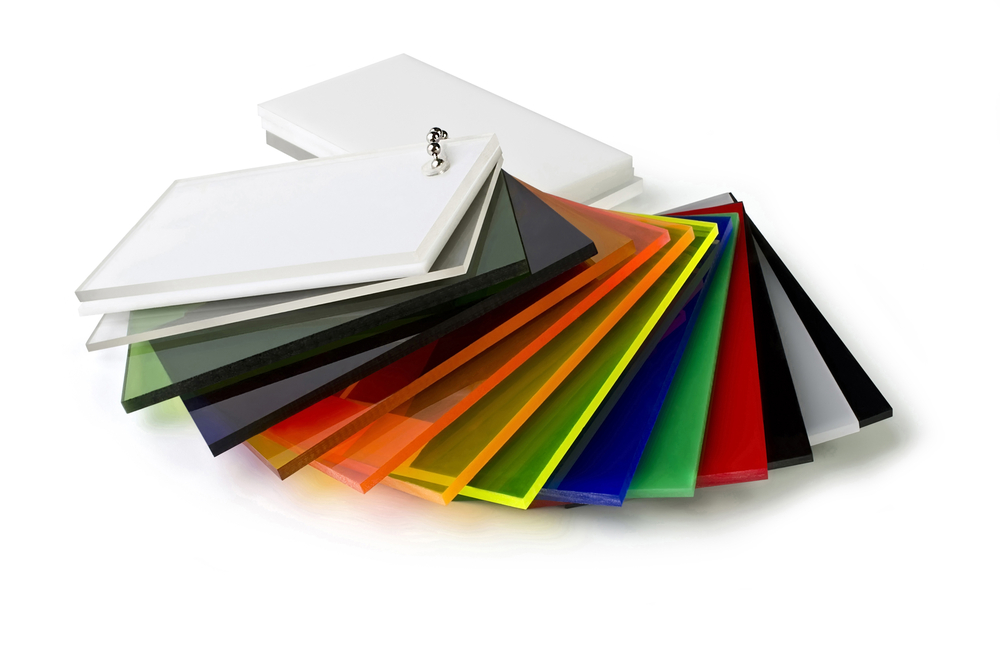
Chemical and Physical Properties
MMA is a clear, colorless liquid at room temperature with a molecular weight of 100.12 g/mol. It has a boiling point of approximately 100-101°C (214°F) and a melting point of -48°C (-54°F). The density is 0.94 g/cm³, and it exhibits limited solubility in water at 1.5-1.6 g/100 ml, though it is miscible with most organic solvents. Its vapor pressure is 29 mmHg at 20°C (or about 4 kPa), making it highly volatile. The log octanol-water partition coefficient (log K_ow) is 1.38, indicating moderate lipophilicity. MMA is highly flammable, with a flash point of 10°C (closed cup) and autoignition temperature around 430°C. Explosive limits in air range from 1.7-2.1% lower to 8.2-12.5% upper. It has a viscosity of 0.6 cP at 20°C and a dipole moment of 1.6-1.97 D. The compound is prone to polymerization under heat, light, or in the presence of initiators, which can lead to exothermic reactions if not properly inhibited. Commercial MMA is typically stabilized with inhibitors like hydroquinone or its methyl ether (10-100 ppm) to prevent unintended polymerization. Purity levels are often 99.9%, with minimal impurities such as methacrylic acid (≤0.003%) and water (≤0.03%).
The structural formula of MMA is H₂C=C(CH₃)C(O)OCH₃, as depicted below:
Other key identifiers include CAS number 80-62-6, EC number 201-297-1, and UN number 1247. In terms of reactivity, MMA reacts with strong acids, bases, and oxidants, and its vapors can form explosive mixtures with air.
Production Methods
Industrial production of MMA is extensive, with multiple routes employed to meet global demand. The primary method is the cyanohydrin route, which accounts for a significant portion of output. This process begins with the condensation of acetone and hydrogen cyanide to form acetone cyanohydrin (ACH): (CH₃)₂CO + HCN → (CH₃)₂C(OH)CN. ACH is then hydrolyzed with sulfuric acid to a sulfate ester, which is cracked and methanolysed to yield MMA: producing about 1.1 kg of ammonium sulfate byproduct per kg of MMA.
An alternative is the methyl propionate route, involving ethylene carbonylation with carbon monoxide and methanol to form methyl propionate (MeP): C₂H₄ + CO + CH₃OH → CH₃CH₂CO₂CH₃. MeP then condenses with formaldehyde over a caesium oxide catalyst on silica: CH₃CH₂CO₂CH₃ + CH₂O → CH₂=C(CH₃)CO₂CH₃ + H₂O, achieving over 99.9% purity with minimal waste. This method, commercialized by Lucite International in 2008, is more environmentally friendly and potentially compatible with biomass feedstocks.
Other routes include oxidation of isobutylene or tert-butanol to methacrolein, then to methacrylic acid, followed by esterification; or via propionaldehyde from ethylene hydroformylation. Historical methods, like the Reppe process using methyl acetylene or the methacrylonitrile process, are less common today due to safety or efficiency concerns. Production volumes have grown steadily, with estimates from the late 1980s at 1.4 million tonnes globally, led by regions like the USA, Japan, and the EU.
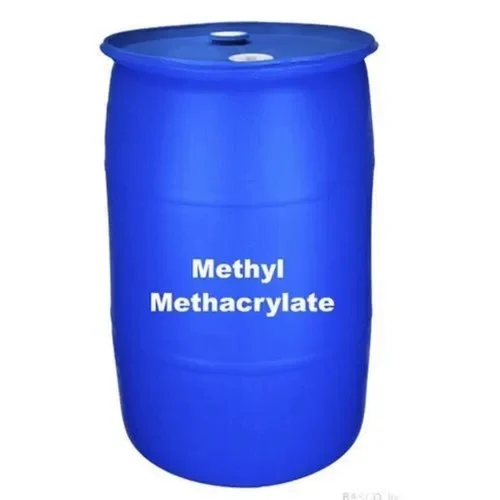
Applications and Uses
MMA’s primary application is in the production of PMMA, accounting for about 75% of its use, resulting in materials like cast acrylic sheets for glazing, displays, and fixtures. PMMA offers shatterproof alternatives to glass, with excellent transparency, UV resistance, and durability. Copolymers like methyl methacrylate-butadiene-styrene (MBS) modify PVC for impact resistance in bottles and packaging.
In coatings, MMA is a comonomer in exterior paints, lacquers, inks, and adhesives, enhancing hardness and weather resistance. It impregnates concrete for water repellency and wood for stabilization. Medical uses include bone cements for joint replacements, dental prostheses, and intraocular lenses, due to biocompatibility. Other applications span sealants, floor polishes, textile finishes, and even orthotic inserts. Historically, it was used in artificial nails, though banned in some regions due to toxicity concerns.
Health and Safety Considerations
MMA exhibits low acute toxicity but is an irritant to skin, eyes, and respiratory tract. Human exposure can cause redness, allergic reactions, coughing, headache, and in severe cases, respiratory distress or unconsciousness. It is a mild skin sensitizer, with occupational asthma reported but not conclusively linked as a respiratory sensitizer. Chronic exposure may lead to nasal irritation, reduced lung function, and neurological effects like olfactory dysfunction. Animal studies show LD₅₀ values of 8420-10000 mg/kg orally in rats and LC₅₀ of 3750-7093 ppm for 4-hour inhalation. No consistent evidence of carcinogenicity exists; IARC classifies it as Group 3 (not classifiable). EPA deems it not likely carcinogenic to humans.
Reproductive effects are limited to fetal abnormalities at maternally toxic doses in animals, with no human data indicating risks. Genotoxicity is mixed: mutagenic in vitro in mammalian cells but limited in vivo. Occupational limits include OSHA PEL of 100 ppm TWA and ACGIH TLV of 50 ppm TWA. Handling requires ventilation, protective gear, and avoidance of ignition sources due to flammability.
Environmental Impact
MMA primarily enters the environment through air emissions (about 86.6% partitioning), with minor releases to water and soil. It has a short atmospheric lifetime due to reaction with hydroxyl radicals and does not contribute to ozone depletion or greenhouse effects. Bioaccumulation is low (BCF ~3), and environmental concentrations are negligible (e.g., predicted air levels at 2.44 × 10^{-4} µg/m³). Aquatic toxicity is low, with EC₅₀ values like 720 mg/L for Daphnia immobilization and LC₅₀ of 191 mg/L for fish. Wide margins exist between effect levels and predicted exposures, indicating minimal risk to ecosystems.
Regulations and Recommendations
Regulatory bodies set exposure limits to mitigate risks: NIOSH REL is 100 ppm TWA, and IDLH is 1000 ppm. EPA’s RfC is 0.7 mg/m³ for inhalation and RfD 1.4 mg/kg/day orally. CICAD recommends a tolerable concentration of 0.2 mg/m³ and TDI of 1.2 mg/kg/day. Storage should be in cool, ventilated areas away from incompatibles, with spill response emphasizing ignition prevention and containment. FDA regulates its use in food contact materials, limiting residuals. Ongoing monitoring and local risk assessments are advised for exposed populations.
More articles by ZMR Researche:
https://www.zionmarketresearch.com/de/report/online-voting-system-market
https://www.zionmarketresearch.com/de/report/insoluble-sulfur-market
https://www.zionmarketresearch.com/de/report/holograms-market
https://www.zionmarketresearch.com/de/report/spatial-light-modulators-market
https://www.zionmarketresearch.com/de/report/millimeter-wave-technology-market-size