Novel Smart Textile Developments in Wearable Technology
Novel Smart Textiles represent the cutting-edge evolution of fabrics that integrate advanced technologies to sense, react, and adapt to environmental stimuli or user needs. These “intelligent” materials go beyond traditional textiles by embedding sensors, actuators, conductive fibers, and energy-harvesting elements, enabling applications in healthcare, fashion, sports, military, and sustainability.
As of 2025, innovations focus on bio-based, biodegradable, self-powered, and AI-integrated fabrics, addressing challenges like e-waste and scalability. The global smart textiles market is valued at approximately USD 3–5 billion in 2025, projected to reach USD 20–26 billion by 2030 with CAGRs of 25–31%, driven by wearable tech demand, healthcare applications, and sustainability mandates.
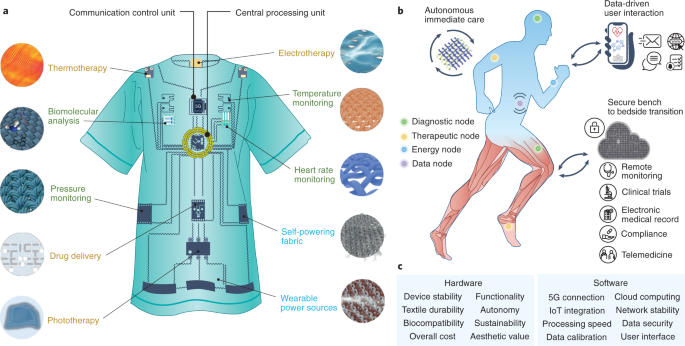
History of Smart Textiles
The Concept of Functional Textiles dates to ancient times, but modern smart textiles emerged in the late 20th century. Early developments in the 1980s–1990s included conductive fibers for anti-static clothing. NASA’s interest in space suits spurred e-textiles research. The 1990s saw prototypes like Georgia Tech’s “Wearable Motherboard” for military health monitoring.
The 2000s brought commercialization: Adidas’ miCoach (2007) integrated sensors; Philips and Levi’s collaborated on illuminated jackets. By the 2010s, Google’s Project Jacquard (2015) wove touch interfaces into fabrics. The 2020s emphasize sustainability and self-power, with 2025 innovations like bio-based capacitive sensors and self-healing materials.
How Novel Smart Textiles Work: The Science
Smart textiles operate via integrated systems:
- Sensing: Embedded sensors detect temperature, pressure, humidity, or biometrics.
- Actuation: Materials respond (e.g., shape-memory alloys change form with heat).
- Energy: Harvested from body motion (piezoelectric), heat (thermoelectric), or solar.
- Connectivity: Conductive yarns enable data transmission to apps/devices.
Novel aspects in 2025 include nanotechnology for flexibility, AI for predictive responses, and biodegradable electronics to reduce waste.
Types of Novel Smart Textiles
Classified by functionality:
- Passive: Sense only (e.g., UV-detecting fabrics).
- Active: Sense and react (e.g., thermoregulating with phase-change materials).
- Very/Ultra-Smart: Adapt autonomously via AI (e.g., self-healing or energy-harvesting).
2025 novelties:
- Self-Powered: TENGs/PENGs harvest energy from movement.
- Bio-Based/Biodegradable: Cellulose sensors from Aalto University.
- Multi-Functional: Fall-detection gowns with ML (98% accuracy).
Applications
- Healthcare: Biometric monitoring, wound-healing fabrics, fall detection for elderly.
- Fashion/Sports: Adaptive clothing, performance tracking.
- Military: Camouflage, vital signs monitoring.
- Sustainability: Self-healing to extend lifespan, energy-efficient thermoregulation.
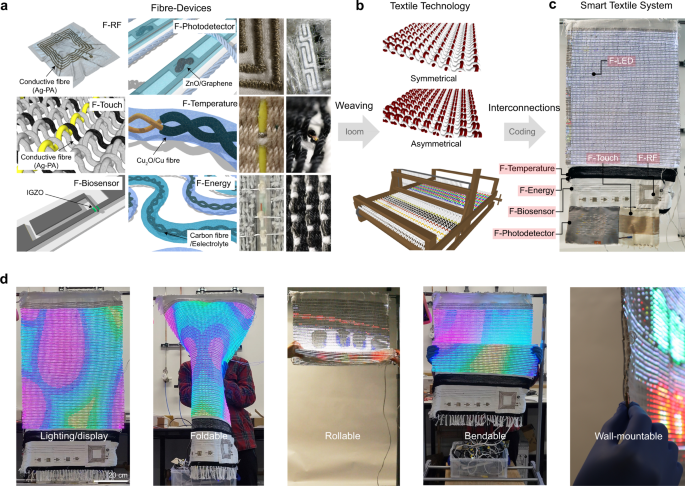
Advantages and Challenges
Advantages:
- Enhanced functionality, sustainability.
- Real-time data for health/prevention.
Challenges:
- High costs, washability, e-waste.
- Privacy, standardization.
Market and 2025 Innovations
Market growth: 25–30% CAGR in sub-sectors. 2025 highlights: Bio-degradable e-sensors, self-powered fabrics, PFAS-free smart materials.
In summary, novel smart textiles are revolutionizing industries with sustainable, intelligent solutions. Future: AI-driven, fully biodegradable systems by 2030.
More articles by ZMR Researche:
https://www.zionmarketresearch.com/de/report/molded-underfill-material-market-size
https://www.zionmarketresearch.com/de/report/electrical-engineering-services-market-size
https://www.zionmarketresearch.com/de/report/sbq-special-bar-quality-steel-market
https://www.zionmarketresearch.com/de/report/hsc-milling-machines-market
https://www.zionmarketresearch.com/de/report/flip-chip-bonder-market