Refiberd Textile Applications in Apparel and Home Textiles 2025
Refiberd is an innovative sustainability startup developing an AI-powered textile recycling system that uses hyperspectral imaging and machine learning to intelligently sort textile waste for circular recycling.
Founded in 2020, Refiberd addresses a major bottleneck in the fashion industry’s circular economy: accurately identifying and sorting complex, blended, and contaminated textiles. Less than 1% of global textile waste is currently recycled into new clothing due to manual sorting limitations; Refiberd’s technology aims to divert up to 70% of waste to high-value recycling streams.

History and Founding
Refiberd was founded in 2020 by Sarika Bajaj (CEO, textile engineering background from Intel) and Tushita Gupta (CTO, AI expertise), who met at Carnegie Mellon University. The company emerged from a vision to apply cutting-edge AI to the textile waste crisis, where over 100 million tons of textiles are discarded annually.
Key milestones:
- 2022: Selected for Fashion for Good Innovation Programme.
- 2023: Raised $3.4M seed funding; won H&M Foundation Global Change Award.
- 2025: Won eBay Circular Fashion Innovator of the Year and Global Fashion Agenda Trailblazer Programme; first commercial deployments and partnerships (e.g., Photon etc. for hyperspectral tech).
How Refiberd’s Technology Works
Refiberd’s core innovation combines hyperspectral imaging (capturing light across dozens to hundreds of wavelengths) with proprietary AI models to create a “spectral fingerprint” for each textile.
Process:
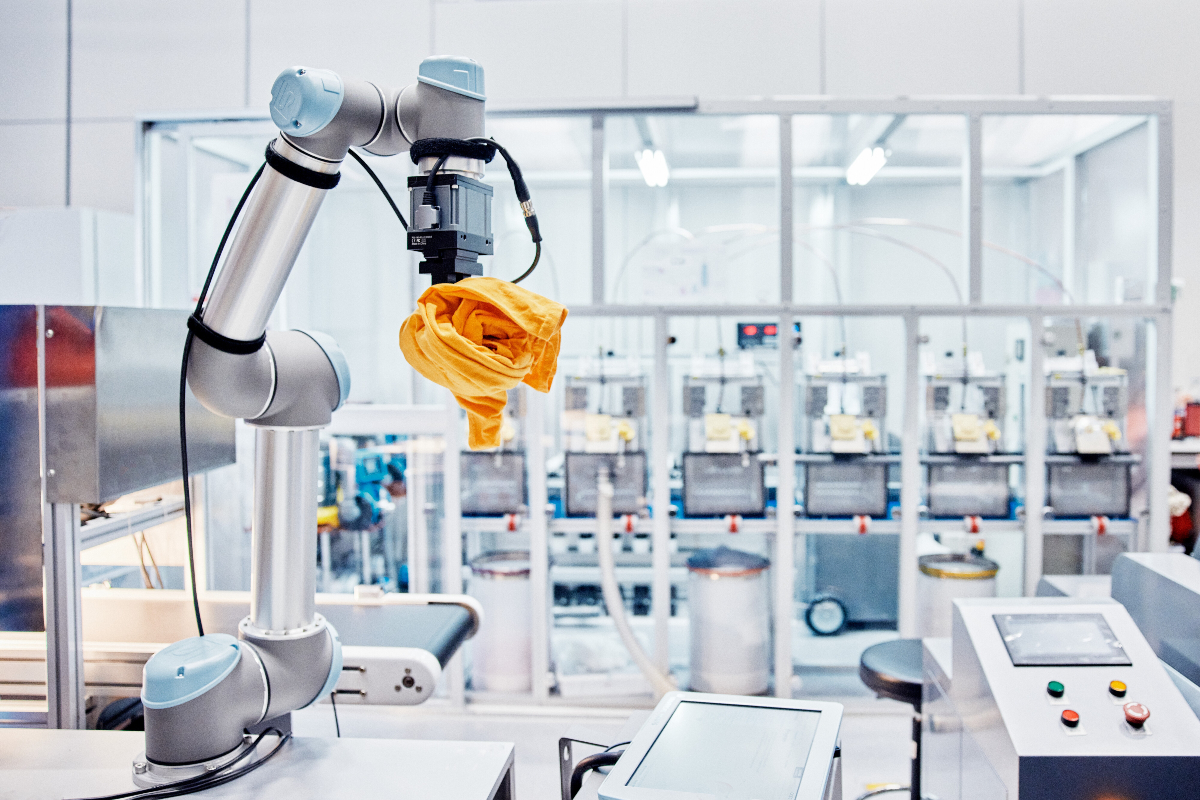
- Textiles move under a line-scan hyperspectral camera.
- Data forms a hyperspectral cube.
- AI (trained on 10,000+ custom samples, augmented by generative models) predicts composition with >90% accuracy, detecting blends, layers, and contaminants (e.g., spandex <1%).
This enables automated sorting for mechanical/chemical recycling, traceability, and resale authentication.
Advantages and Impact
- Scalability: One unit sorts millions of pounds annually; addresses unsorted waste.
- Accuracy: Handles blends/contaminants manual sorting misses.
- Sustainability: Reduces landfill/incineration, lowers CO₂.
- Economic: Cleaner feedstock improves recycler yields.
Challenges: Scaling hardware, integrating with existing facilities.
Applications and Partnerships
Refiberd serves recyclers, brands, resellers, and traceability providers. Applications include waste sorting, supply chain verification, and digital product passports. Partnerships: Photon etc., GenuTrace (isotope verification).
In summary, Refiberd’s AI-driven system is a breakthrough for textile-to-textile recycling, enabling true circularity in fashion. As deployments grow in 2025+, it promises to transform waste into valuable resources. For details, visit refiberd.com.
More articles by ZMR Researche:
https://www.zionmarketresearch.com/de/report/gyrocopters-market
https://www.zionmarketresearch.com/de/report/gabion-boxes-market
https://www.zionmarketresearch.com/de/report/asset-optimization-solutions-market-size
https://www.zionmarketresearch.com/de/report/polyols-polyester-polyether-market
https://www.zionmarketresearch.com/de/report/hypersensitivity-pneumonitis-market