Returnable Glass Bottle Inks: Sustainability in Beverage Packaging
Returnable Glass Bottle Inks, also known as reusable glass container inks or returnable packaging labels, are specialized printing inks formulated for application on glass bottles designed for multiple reuse cycles in beverage packaging. These inks must withstand repeated washing, filling, and handling processes while maintaining legibility, adhesion, and safety for food contact. Unlike single-use labels, inks for returnable bottles are directly printed (often via screen printing) or applied as ceramic frits that fuse permanently to the glass.
The returnable bottle system, common in beer, soft drinks, and mineral water industries, promotes sustainability by reducing packaging waste. Inks play a critical role in branding, traceability, and compliance. Countries like Germany (deposit-return systems), Mexico, and parts of Latin America and Asia lead in returnable bottle usage, with refill rates exceeding 30-50 cycles per bottle. The market for such inks is part of the broader glass decoration sector, valued at several hundred million USD globally as of 2025, driven by environmental regulations and circular economy initiatives.
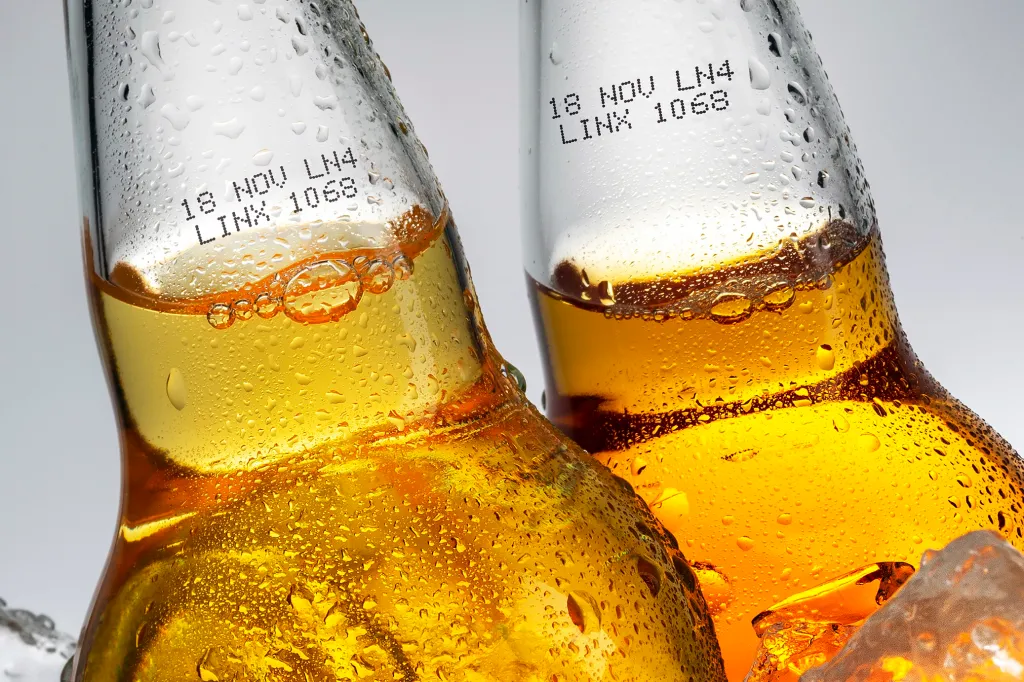
Types of Inks for Returnable Glass Bottles
Inks are classified by composition, application method, and durability:
- Organic Inks Solvent- or water-based screen-printing inks cured by UV or thermal processes. Used for multi-color logos and designs. Require high caustic resistance for bottle washing (50-80°C sodium hydroxide solutions).
- Ceramic Inks (Frits) Glass-based pigments fused to the bottle surface at 600-700°C during annealing (Applied Ceramic Labeling – ACL). Permanent, scratch-resistant, and fully recyclable with glass. Dominant for high-volume returnable bottles (e.g., beer brands).
- UV-Curable Inks Fast-drying, low-VOC; excellent adhesion and flexibility for complex designs.
- Water-Based Inks Environmentally friendly; lower emissions, easier cleanup.
- Hybrid Inks Combine organic and inorganic elements for enhanced durability.
Specialized variants include thermochromic (color-change for cold indication) or luminescent inks for premium branding.
Key Properties and Requirements
Returnable bottle inks must endure harsh conditions:
- Caustic Wash Resistance: Survive 2-5% NaOH at 60-80°C for hundreds of cycles without fading or peeling.
- Adhesion: Strong bond to glass (silane primers often used).
- Abrasion/Scratch Resistance: Withstand mechanical handling, crate stacking.
- Food Safety: Migration limits per FDA/EU regulations (no heavy metals like lead/cadmium in modern formulations).
- Thermal Stability: Resist pasteurization/sterilization temperatures.
- Recyclability: Ceramic inks fully compatible; organic inks removable in washing.
Colors: White, black standard; vibrant options limited by wash resistance.
Application Methods
- Screen Printing Dominant for organic inks; multi-color possible with multiple passes.
- Applied Ceramic Labeling (ACL) Ceramic frit paste screen-printed, then fired in lehr (oven) during bottle manufacturing.
- Digital Printing Emerging UV inkjet for short runs/customization; improving durability.
- Pad Printing For small logos or date codes.
Post-print curing: UV lamps or thermal tunnels.
Manufacturing and Formulation
Inks comprise:
- Pigments: Inorganic (titanium dioxide white, iron oxides) for ceramic; organic for screen.
- Binders: Glass frit (ceramic) or polymers (organic).
- Vehicles: Solvents or water.
- Additives: Fluxes (ceramic melting), adhesion promoters, rheology modifiers.
Production: Precise milling for particle size (<10 μm ceramic); quality control for viscosity, opacity, and wash resistance.
Environmental and Sustainability Aspects
Returnable systems with durable inks:
- Reduce single-use packaging waste (up to 90% vs. disposables).
- Lower carbon footprint (refill cycles offset production energy).
- Enable closed-loop recycling (glass cullet reuse).
Modern inks minimize VOCs, heavy metals, and use bio-based binders where possible. Ceramic inks preferred for infinite recyclability.
Regulatory Compliance
- FDA 21 CFR 176.170 (indirect food contact).
- EU Framework Regulation (EC) 1935/2004.
- Heavy metal limits (California Prop 65, EU RoHS).
- Migration testing (EN 646, EU 10/2011).
Organic inks require caustic removability for glass recycling.
Challenges
- Balancing vibrancy with wash resistance.
- Cost (ceramic process energy-intensive).
- Design limitations (halftones difficult in ACL).
- Ink removal in washing (organic) or permanence (ceramic).
Market Trends
- Growth in returnable systems (deposit laws in Europe, emerging markets).
- Digital ACL for customization.
- Sustainable inks (low-energy curing, bio-derived).
- Premium branding (metallic, tactile effects).
Leading suppliers: Ferro, Sun Chemical, Marabu, Huber Group.
Conclusion
Returnable glass bottle inks enable durable, attractive branding in sustainable packaging systems, supporting circular economy goals. Ceramic ACL remains the gold standard for longevity, while organic screen inks offer flexibility. As environmental regulations tighten and consumer preference shifts toward reusable packaging, innovations in ink durability, safety, and eco-friendliness will drive continued advancement in this specialized field.
More articles by ZMR Researche:
https://www.zionmarketresearch.com/de/report/anti-static-bags-for-electronics-market
https://www.zionmarketresearch.com/de/report/asset-recovery-services-market
https://www.zionmarketresearch.com/de/report/surface-mount-technology-market-size
https://www.zionmarketresearch.com/de/report/subsea-trencher-market
https://www.zionmarketresearch.com/de/report/refurbished-running-shoes-market